
SEMINAR & MINI-COURSE
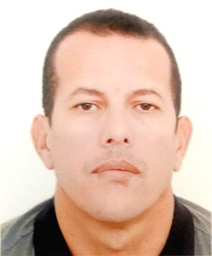
Speaker: Halim Zeghdoudi (Badji Mokhtar Annaba University, Algeria)
SEMINAR: 26 October 2026, 14:00 to 15:00
Title: From Flexible Lifetime Distributions to SIRS/SEIR Epidemic Dynamics: Statistical and Mathematical Models for Biosciences
Place: CENIMAT Amphitheater
Abstract:
Probability and mathematical modelling offer complementary ways of understanding biological and health-related phenomena. While statistical distributions help describe individual variability and observed data, dynamical models provide insight into how diseases evolve and how interventions may influence their spread. In this talk, I will present selected results from our recent research, beginning with flexible lifetime distributions, including the XLindley, New XLindley, Zeghdoudi, and related families. I will discuss their mathematical properties, mixture representations, statistical inference, and applications to lifetime and reliability data. I will then show how continuous distributions can be used to construct count models capable of accounting for heterogeneity and overdispersion. The second part will focus on discrete epidemic models, particularly SIRS systems. We will discuss equilibrium points, stability conditions, and bifurcation phenomena, illustrating how changes in model parameters can lead to oscillations and more complex epidemic behaviour. I will also present recent work on optimal control strategies that take these dynamical features into account, including applications to COVID-19 data. Finally, I will briefly introduce ongoing research on an SEIR model for tuberculosis, incorporating nonlinear transmission mechanisms and treatment limitations.
COURSE:
Lecture 1/2: 30/10/2026 (Friday), from 14h00 to 16h00
Lecture 2/2: 02/11/2026 (Monday), from 14h00 to 16h00
Title: Statistical and Mathematical Modelling in Biosciences: Lifetime, Count, and SIR/SIRS Epidemic Models
Place:Room 4.17, Departamento de Engenharia Civil (Edifício IX)
Abstract:
This mini-course introduces statistical and mathematical tools for studying lifetime data, event counts, and epidemic dynamics. The emphasis will be on understanding the mathematical ideas behind the models and how they can be applied to biological and epidemiological problems. We will first explore flexible lifetime distributions, focusing on Lindley-type models, Gamma-mixture representations, survival and hazard functions, and reliability properties. We will then consider count-data models, particularly mixed-Poisson distributions, and discuss how they account for overdispersion and population heterogeneity. The second part will focus on continuous and discrete SIR/SIRS epidemic models. We will examine the basic reproduction number, disease-free and endemic equilibria, local stability, and bifurcation phenomena. We will also discuss how mathematical analysis can help understand epidemic persistence, oscillations, and control strategies. The course will combine mathematical explanations, worked examples, and exercises. It is intended for graduate students, PhD students, and researchers interested in probability, statistics, differential equations, and mathematical biology.
4h lecture in 2 sessions of 2h each
Session 1
Flexible Lifetime and Count-Data Models
– Lindley-type distributions and Gamma-mixture representations.
– Survival and hazard functions and reliability properties.
– Statistical inference and model comparison.
– Mixed-Poisson distributions, overdispersion, and biomedical count data.
Session 2 (1h30m)
Mathematical Modelling of Epidemic Dynamics
– Continuous and discrete SIR/SIRS models.
– Basic reproduction number and epidemic thresholds.
– Disease-free and endemic equilibria.
– Stability analysis and bifurcation phenomena.
– Epidemic control and illustrative examples.